Under Competency Based Training and Assessment you are not sitting a single pass-or-fail test, but you still have to demonstrate each unit properly. These are the things that most often hold drivers back — and every one of them is fixable.
1. Doing the daily check as a routine, not a recital
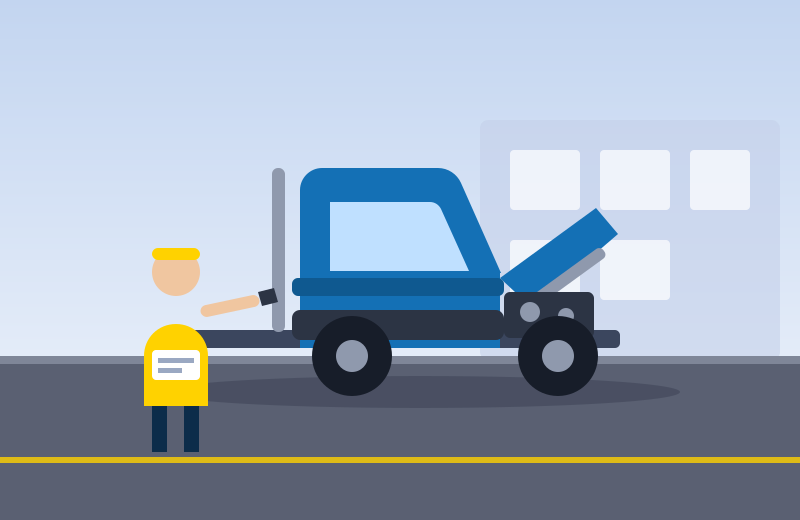
Assessors want to see you actually looking at the component, not reciting a list at the windscreen. Walk the same route around the truck every time. Point at what you are checking. Say what you are checking it for, not just its name.
2. Cabin drill before you touch the key
Seat, mirrors, steering position, park brake, gear position, then start. Doing this in the same order every lesson means you will not skip it when you are nervous.
3. Air brake checks done properly
On MR and HR vehicles the brake test sequence matters. Rushing it, or doing part of it, is one of the most common things that has to be repeated. Learn why each stage exists and it becomes much harder to forget.
4. Mirrors used visibly and often
An assessor cannot read your mind. Deliberate, obvious mirror checks before every manoeuvre, lane change and turn tell them you are actually scanning.
Nobody is marking whether you are quick. They are marking whether you are safe, deliberate and in control of a vehicle that can weigh more than a house.
5. Turning lines that account for the back of the truck
The most common fault in rigid vehicles is turning too early and cutting the kerb with the rear wheels. Go deeper into the intersection than instinct tells you, then turn.
6. Setting up reverses before moving
Most of a good reverse is the starting position. If your set-up is wrong, no amount of steering correction rescues it. Take the extra few seconds to line up square.
7. Getting out and looking
Getting out to check behind you is not a weakness, it is professional practice. Assessors would far rather see you check than guess.
8. Speed appropriate to the load
Driving a loaded truck at the speed limit is not automatically correct. Approaching a roundabout or a wet corner too fast for the weight behind you shows a lack of judgement even if you never leave your lane.
9. Gear selection before the hazard, not during it
Select your gear on approach so you are settled through the corner, the roundabout or the crest. Changing gear mid-hazard removes a hand from the wheel exactly when you need it.
10. Finishing the job
The assessment is not over until the park brake is on and the vehicle is secured. Every so often someone relaxes in the last minute and clips a kerb on the way back in. Stay switched on until the engine is off.
The common thread
All ten come down to the same thing: deliberate, repeatable process. Build the routine during lessons, run it identically every time, and assessment day is just another repetition.
Every BSR student is assessed by the same person who trained them, in the same truck, on roads they already know. Book an assessment drive and we will tell you honestly where you are up to.